In the world of embedded systems, a silent hero is living between your application code and the raw silicon. It doesn’t get the glory of the user interface or the mystique of the latest microcontroller, but without it, your embedded product is just a collection of inert circuits.
We are talking about the Embedded Software BSP, the Board Support Package.
At embeddeddesigner.com, we have spent over a decade building these bridges. We’ve seen how a well-structured BSP can make the difference between a six-month delay and a seamless product launch. Today, let’s pull back the curtain on what a BSP really is, why it’s the bedrock of reliable embedded design, and how getting it right sets the stage for your product’s success.
What Exactly is an Embedded Software BSP?
Imagine trying to host a dinner party where every guest speaks a different language, and you have to translate every single conversation manually. Exhausting, right? That is what it is like for your operating system or middleware to talk directly to the bare metal of a custom circuit board.
A Board Support Package is the interpreter.
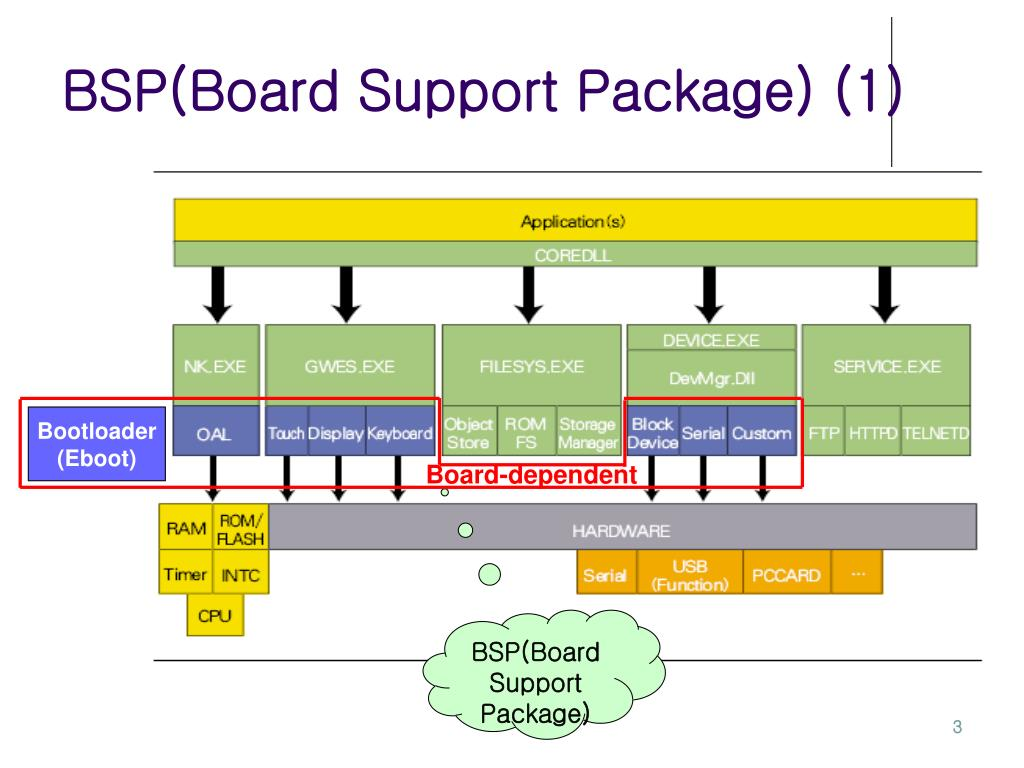
Technically speaking, it is the layer of software that enables a higher-level operating system (such as Linux or an RTOS) or a bare-metal application to run on a specific piece of hardware. It abstracts the messy details of memory maps, register addresses, and peripheral quirks so your application code can just… work.
The Anatomy of a BSP
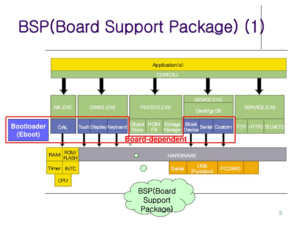
When our engineers at embeddeddesigner.com sit down to craft a custom BSP, we are typically assembling several critical components. According to industry standards, a robust BSP usually includes :
- The Bootloader (IPL/Startup Code): This is the very first code that runs when the processor powers on. It initializes the clocks and memory controllers and sets the stage for loading the operating system.
- Device Drivers: These are the translators for your peripherals. Whether it is an Ethernet controller, a USB port, an I2C sensor, or a SPI NOR flash, the drivers tell the OS how to push and pull data.
- The Hardware Abstraction Layer (HAL): This isolates the rest of your software from hardware changes. If you swap out a memory chip in revision two of your board, the HAL contains the chaos, so you don’t have to rewrite your entire application.
- Configuration Scripts: These glue everything together, defining the interrupts, memory mapping, and system clocks.
The “Human” Cost of Cutting Corners
In the fast-paced world of IoT and product development, there is always pressure to hurry. We often see startups try to grab a “close enough” BSP from the internet or reuse one from a previous project without proper validation.
This is where the human touch comes in.
Cutting corners on embedded software BSP development is like building a house on a foundation of sand. Sure, it might look fine for a while, but the first time a “storm” hits, like a firmware update or a hardware revision, the cracks appear. Debugging a system crash at 2:00 AM only to find it was a misconfigured interrupt in the BSP is a rite of passage no engineer wants to experience.
A well-crafted BSP isn’t just about code; it’s about peace of mind. It’s about ensuring that the hardware engineers and software engineers can work in parallel without stepping on each other’s toes. It’s the tool that allows your team to focus on the unique value of your product, the application logic, rather than fighting with register maps.
Custom BSP Development: A Strategic Advantage
Off-the-shelf development boards usually come with a generic BSP. It works great for evaluation, but it is rarely optimized for a production environment. A generic BSP often carries dead weight, drivers for peripherals you aren’t using, which bloats boot times and consumes memory.
This is where partnering with experts like embeddeddesigner.com pays dividends. Custom BSP development allows you to:
- Optimize Performance: Strip away unnecessary components to reduce boot time and memory footprint.
- Enhance Security: Configure the bootloaders and integrate secure boot mechanisms from day one.
- Future-Proof the Product: Structure the BSP layers so that future hardware iterations don’t require a complete software rewrite.
The Art of Hardware-Software Integration
The magic truly happens at the intersection of hardware and software. As an embedded software BSP developer, you have to think like a hardware engineer. You need to understand the schematics, the pin multiplexing, and the power sequencing.
At embeddeddesigner.com, we view the BSP as a living document of the hardware’s capabilities. When we bring up a new ARM-based SoC or an FPGA-based system, we are essentially teaching the software how to love the hardware. This process, often called “board bring-up”, is the ultimate test of the hardware design. It’s where theory meets reality, and it requires a deep bench of experience to navigate successfully.
Looking Ahead: BSPs in a Complex World
As we move further into 2026, the complexity of embedded systems is exploding. We are seeing more heterogeneous computing (mixing microcontrollers with FPGAs), more AI at the edge, and stricter safety requirements in automotive and medical devices.
In this environment, the Board Support Package evolves from a simple “bridge” into a sophisticated platform. It must handle advanced power management, functional safety partitioning, and complex real-time constraints.
Whether you are building the next generation of smart agricultural tech, a medical wearable, or an automotive control unit, the journey begins with the BSP.
Let’s Build Something Reliable Embedded Software BSP
At embeddeddesigner.com, we don’t just write code; we build partnerships. Our team has the scars and the success stories to prove that great embedded software BSP design is the secret sauce to a durable, scalable product.
If you are staring down a complex hardware integration or want to ensure your next product has the rock-solid foundation it deserves, reach out to embeddeddesigner.com. Let’s bridge the gap between your idea and reality.